
A garage door scam pitch relies on urgency, vague answers, and pressure to get a signature before a homeowner has time to think it through. These tactics are built to work in the moment, which is exactly why they fall apart the instant someone slows down and asks a direct question.
Homeowners who fall for a scam pitch often describe the same feeling afterward, a sense that something felt rushed. This guide breaks down the language and pressure patterns behind a scam pitch, including how they differ from a straightforward garage door repair conversation with a legitimate company.
Key Takeaways
- Manufactured urgency is a common tool used to prevent comparison shopping between companies.
- A technician who cannot produce a license number on request is rarely a legitimate hire.
- Cash-only demands and large upfront deposits remove any real path to a refund.
- Scripted language that avoids direct questions often signals a rehearsed, dishonest pitch.
- A quote that rises sharply once a technician arrives is a common bait-and-switch tactic.
Signs of a Garage Door Scam Pitch

The exact words a technician uses, from the first phone call through the final quote, often reveal a scam pitch before any work begins.
What the Pitch Sounds Like | What It Usually Means | What to Do Instead |
“This needs to be fixed today, or it could fail.” | Manufactured urgency to prevent comparison shopping | Ask what happens if the repair waits until tomorrow |
“I’ve been doing this for years, trust me.” | A dodge around a direct license number request | Ask for the license number and verify it independently |
“We only take cash for jobs like this.” | An attempt to avoid a traceable payment record | Request a card or check payment with a written receipt |
“Now that I’m here, I’m seeing more damage.” | A bait-and-switch pricing tactic once on site | Ask for photos of the new issue and a second opinion |
“I can only offer this price if you decide now.” | Pressure to skip comparing other quotes | Decline and request time to review the estimate |
Recognizing a manipulative phrase in the moment gives a homeowner the chance to pause and ask a direct question before agreeing to anything.
Urgency and Pressure Tactics
Manufactured urgency exists for one purpose: to get a decision made before a homeowner has time to compare options or ask questions.
These pressure tactics tend to follow a predictable script:
- A part is described as likely to fail within hours without immediate repair.
- A discount is offered only if the homeowner agrees to the work today.
- The technician frames a routine issue as a safety emergency requiring instant action.
- Follow-up questions are met with warnings that the door will get worse overnight.
- The homeowner is told other companies will charge more for the same garage door emergency repair service.
A pitch that manufactures urgency around a routine issue is rarely honest about the door’s actual current condition.
Vague or Missing Credentials
A technician who cannot answer a direct question about licensing is showing a real, immediate sign of a scam pitch in progress.
This pattern of dodged questions usually looks like one of the following:
- The technician recites years of experience instead of a specific license number.
- A license number given over the phone does not match the one on the invoice.
- Written proof of insurance is never brought to the appointment despite being requested.
- The company name and address on the vehicle do not match the details used during scheduling.
- Questions about the business address are answered vaguely or redirected entirely.
To confirm whether a company’s credentials actually hold up, read our guide on How to Vet a Garage Door Company Before Hiring, which walks through the exact steps for checking a license and insurance before any work begins.
Unusual Payment Demands
Payment requests that fall outside normal business practice are a direct indicator of a scam pitch already in progress.
A legitimate company rarely asks for any of the following:
- They request cash as the only accepted form of payment.
- They demand a large deposit or the full balance before any garage door service begins.
- They offer no receipt or written record of the payment afterward.
- The homeowner is discouraged from using a card that would allow a dispute.
- They request payment to a personal account instead of a business account.
To recover from a payment already made under one of these conditions, read our guide on How to Recover From a Bad Garage Door Hire, which covers disputing a charge and documenting the transaction for a formal complaint.
Scripted or Rehearsed Language
A pitch that sounds identical every time it gets repeated to different homeowners often reflects a script built to manipulate rather than inform.
A rehearsed pitch usually breaks down in one of these moments:
- The technician repeats the same phrases regardless of the specific question asked.
- Generic scare language gets used instead of details specific to the actual door.
- Direct questions are answered by returning to the original sales pitch.
- The technician hesitates or grows defensive when asked about credentials.
- Answers change each time slightly the same question is repeated.
A legitimate technician can always explain the specific problem with the door in plain terms without falling back on a rehearsed script.
Bait-and-Switch Pricing
A quote that changes dramatically once a technician is already on site is one of the more common scam tactics in the industry.
The shift from low quote to high bill typically happens in this order:
- A low quote is given over the phone to secure the appointment.
- The price increases sharply once garage door installation or repair work begins.
- Additional problems are discovered that were never mentioned during the initial call.
- The original quote is said to have covered only a fraction of the work.
- Pressure gets applied to approve the new total instead of comparing quotes.
To understand the financial exposure a bait-and-switch pitch creates, read our guide on The Hidden Risks of Hiring the Cheapest Garage Door Company, which breaks down the hidden fees, voided warranties, and liability that follow a rushed decision.
Decline Any Pitch Built on Pressure or Secrecy
A pitch relying on urgency, vague answers, or shifting prices rarely improves once work begins, and it often gets worse from there.
Ending the conversation early is easier once these responses are ready in advance:
- Ask for time to review the estimate instead of agreeing on the spot.
- Request the license number in writing before scheduling anything further.
- End the call or visit if pressure continues after you ask a direct question.
- Contact a second company for a comparison before making any commitment.
- Document the pitch in writing while the details are still fresh.
To vet a company before any pitch can apply pressure, read our guide on How to Vet a Garage Door Company Before Hiring, which covers the exact checks that confirm a company is legitimate before scheduling anything.
Always Question a Pitch That Rushes the Decision
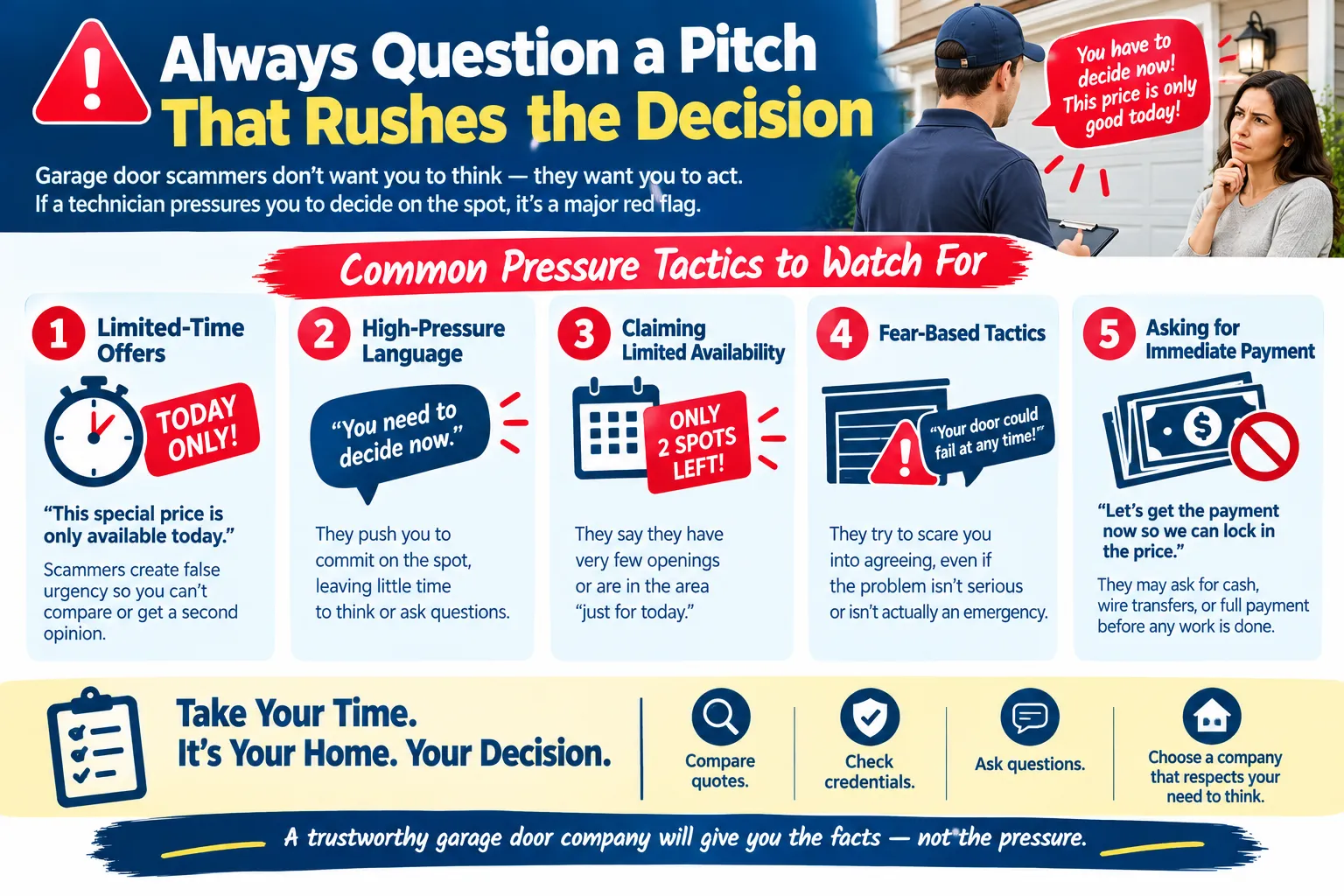
A legitimate garage door company answers direct questions clearly, keeps its pricing consistent, and never needs urgency, secrecy, or pressure to close a sale. Slowing down long enough to ask a few pointed questions can help homeowners assess whether a pitch is legitimate before committing to anything.
Davis Overhead Doors, LLC puts every quote in writing and answers licensing questions without hesitation for homeowners across Cleveland, TX, if you want a straightforward experience. Contact us or give us a call today, and let our technicians walk through the details without any pressure to decide on the spot.