
Continuing to use a garage door with a worn spring carries real risk, since the remaining tension can release suddenly and without warning, often during a routine cycle. A door that still opens and closes normally doesn’t mean the spring underneath is safe to rely on for daily use.
A confirmed symptom is reason enough to arrange garage door service before damage spreads to the opener or tracks. This guide breaks down each risk of continued use, what typically happens when you ignore a symptom, and when the situation becomes a genuine emergency.
Key Takeaways
- A worn spring can fail completely without any warning.
- Anyone standing near the door during a failure faces a real risk of serious injury.
- The opener motor strains harder to compensate for a spring that has lost tension.
- A sudden drop can damage tracks, rollers, or panels beyond the spring itself.
- Manual operation becomes less predictable and less safe as spring tension declines.
The Risks of Continued Use With a Worn Spring
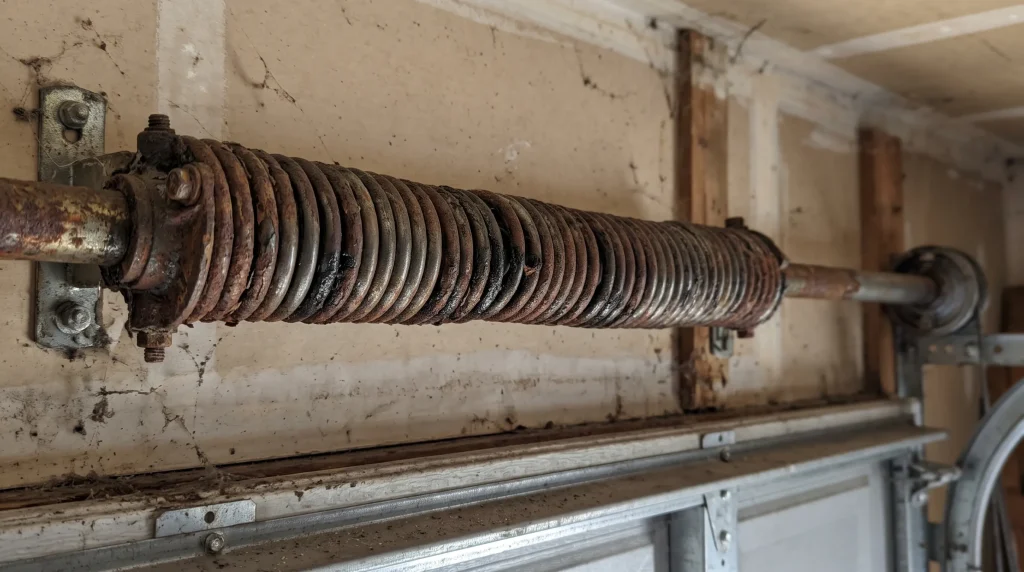
Physical risk increases the longer a worn spring stays in daily service, even when the door still appears to function normally on the surface.
Risk | Why It Happens | How Serious It Is |
Sudden total failure | Remaining tension gives out without warning | High, can happen at any time without notice |
Injury to bystanders | High-tension release near the point of failure | High, capable of causing serious injury |
Opener strain | Motor compensates for lost spring tension | Moderate, accelerates opener wear over time |
Track and panel damage | Uneven fall or impact if the door drops | Moderate to high, depending on how far it falls |
Unpredictable manual operation | Reduced control when overriding the opener | Moderate, especially during emergency release |
A single incident can affect the door, the opener, and anyone standing nearby all at once, not just the spring that started the problem.
Sudden and Complete Failure
A worn spring does not fail on a predictable schedule, so you can’t anticipate the exact timing of a complete break.
A break can happen under any of these circumstances:
- A spring that appears stable one day, failing completely the next.
- No final warning sign appearing before the moment of failure itself.
- Failure occurring mid-cycle, with the door partway open or closed.
- A spring that has already shown minor symptoms failing suddenly regardless.
- Cold weather or heavy use accelerating the timeline without notice.
To understand how the average lifespan and replacement window relate to this unpredictability, read our guide on How Often Should Garage Door Springs Be Replaced?, which breaks down cycle counts and realistic timing by spring type.
Injury to Anyone Nearby
High tension stored in a spring can release suddenly and seriously injure anyone standing close to the door, with little to no advance warning.
The moment of failure often plays out in one of these ways:
- Metal fragments or hardware releasing suddenly during a snap.
- The door itself dropping without warning onto anyone standing underneath.
- Children or pets moving through the garage at an unpredictable moment.
- Hands or fingers caught near moving parts during a sudden failure.
- Bystanders unaware that a spring has already shown signs of wear.
Calling for emergency garage door repair the moment you hear a loud bang or notice a sudden drop is safer than waiting for a routine appointment.
Added Strain on the Opener
The opener motor works harder to lift a door once the spring can no longer offset the door’s full weight on its own, cycle after cycle.
Watch for the opener showing any of the following:
- The opener making new grinding or straining noises during operation.
- Slower-than-normal movement as the motor compensates for lost support.
- Increased wear on gears and belts inside the opener unit.
- A higher risk of motor burnout under the additional load.
- Circuit boards or sensors failing sooner due to constant overwork.
Scheduling garage door opener repair once these symptoms appear protects the motor from the kind of damage a worn spring causes over time.
Damage to Tracks, Rollers, or Panels
Sudden drops or uneven movement can cause damage that extends well beyond the spring itself, often affecting several parts of the door at once.
A single drop can leave marks in several places at once:
- Tracks bending or warping from the force of an uneven drop.
- Rollers cracking or popping out of alignment during a sudden fall.
- Panels denting or cracking when they hit the ground or frame.
- Cables fraying or snapping under the sudden shift in tension.
- Hinges loosening from the stress of an unexpected impact.
A visible dent or crack often spreads to neighboring panels if left alone, which is why garage door panel replacement is worth arranging quickly.
Reduced Control During Manual Operation
Manual override becomes less predictable once spring tension has already declined significantly, especially when the opener is disconnected entirely.
Loss of control becomes clear through situations like these:
- The door feeling heavier and harder to lift by hand than expected.
- Sudden drops occurring during manual testing instead of a controlled descent.
- Emergency release cords disconnecting the opener without warning of what follows.
- Reduced ability to stop the door partway through manual movement.
- Increased risk during a power outage when manual operation becomes necessary.
To learn what specifically causes a spring to reach this level of instability, read our guide on What Causes a Garage Door Spring to Wear Out?, which breaks down the mechanisms behind declining spring performance.
Should a Worn Spring Be Handled by a Professional?
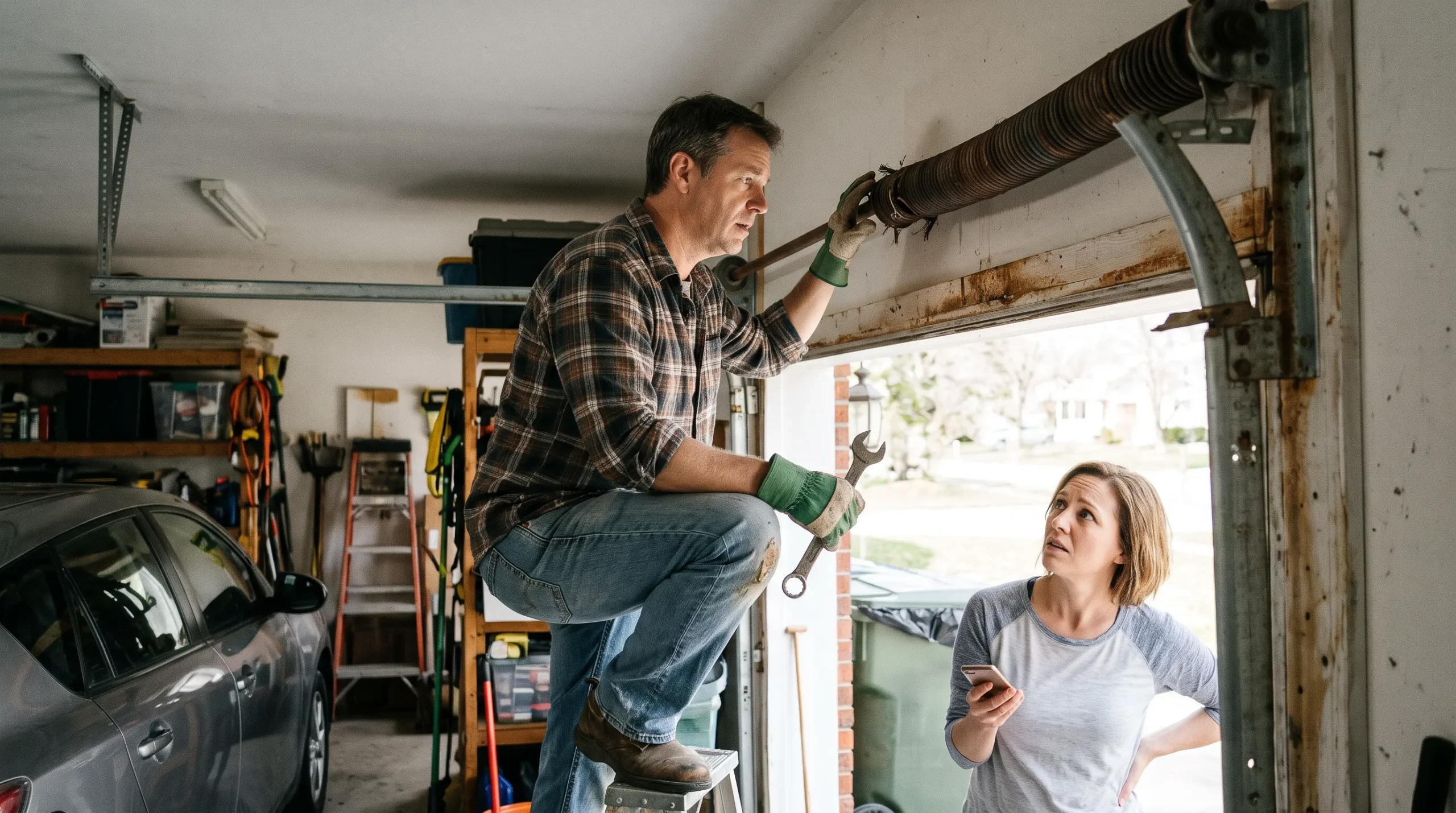
If a worn spring shows any confirmed symptom, treat it as a job for a licensed technician rather than a do-it-yourself repair.
The right call depends on how the symptom presents itself:
- Contact a professional immediately if the door dropped suddenly or made a loud bang.
- Schedule an inspection within days for a gradually developing symptom.
- Avoid attempting a spring adjustment personally, regardless of the tools on hand.
- Ask for a written assessment before agreeing to any repair or replacement.
- Confirm licensing and insurance before allowing anyone to handle the spring.
To confirm whether a specific symptom qualifies as urgent, read our guide on Signs a Garage Door Spring Needs Replacement, which breaks down each warning sign and what it means for continued use.
A Worn Spring Almost Never Gets Safer With Time
A worn spring typically stays the same or gets worse without service, and the risks outlined above only grow the longer the door stays in daily use, sometimes compounding faster than expected. Addressing the issue promptly protects the door system, the opener, and everyone who relies on the garage every day.
Davis Overhead Doors, LLC inspects and replaces worn springs for homeowners across Cleveland, TX, before continued use turns into a safety incident. Contact us or give us a call today, and let our technicians confirm exactly how much risk remains before it becomes a real problem.