
A loud bang, a door that feels heavier than usual, or uneven movement on one side all point to a spring nearing the end of its usable life. Confirming a symptom early and scheduling garage door service promptly can keep a partial failure from becoming a complete one.
Springs seldom fail without some warning, since visible and audible clues tend to build gradually over weeks or months before anything goes seriously wrong. This guide breaks down each sign in detail, explains what it typically means, and confirms what it signals for continued use.
Key Takeaways
- A visible gap in the coil almost always means the spring has already partially failed.
- A loud bang or snap during operation signals a spring has likely broken under tension.
- A door that feels noticeably heavier when lifted points to declining spring tension.
- Uneven or crooked door movement often means one spring is weaker than the other.
- A door that will not stay open on its own signals critically low spring tension.
How to Tell a Garage Door Spring Needs Attention
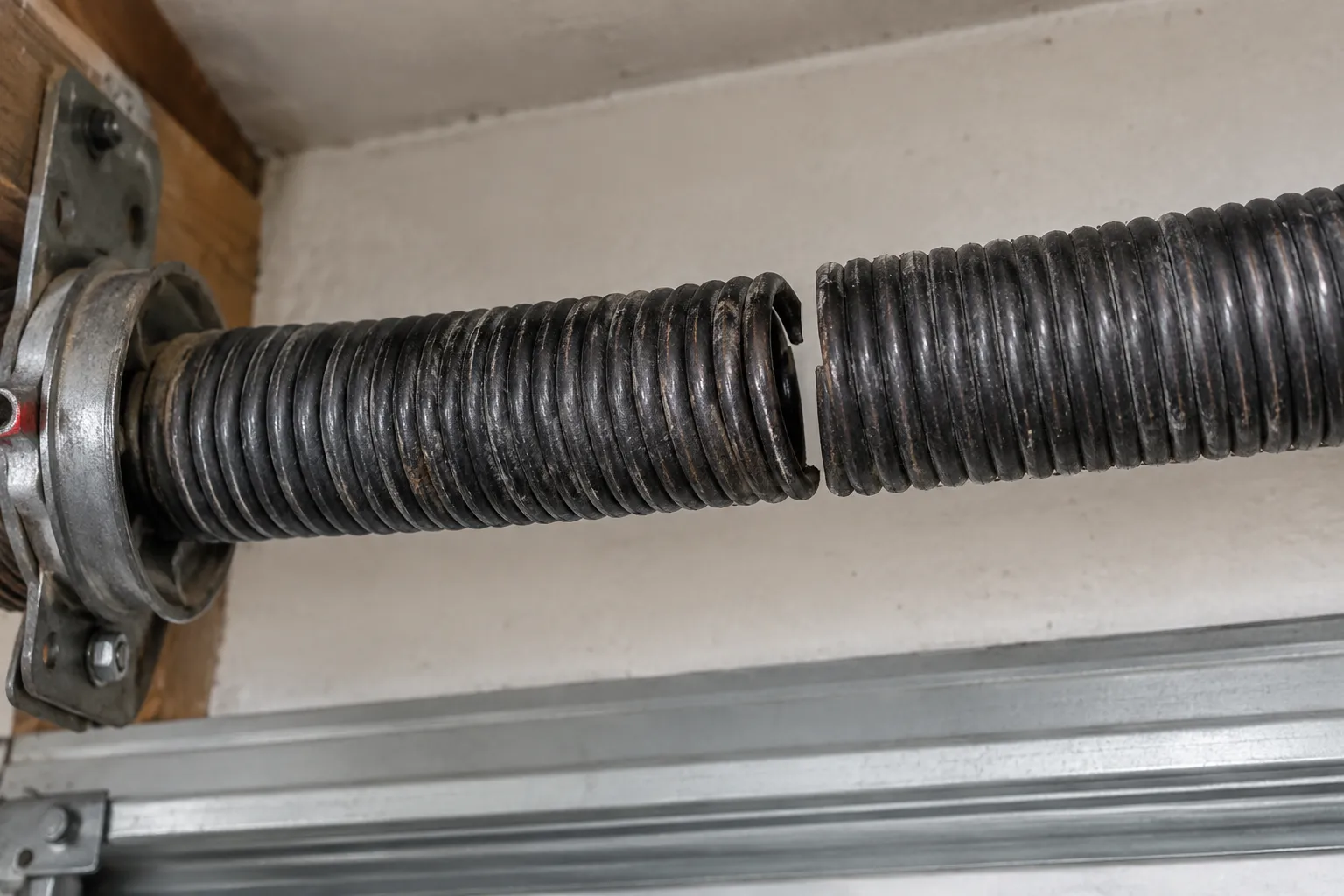
Physical symptoms typically appear in a predictable order as a spring moves closer toward complete failure over several weeks or months.
Sign | What It Looks Like | What It Means |
Visible gap in the coil | A noticeable separation in the spring’s metal coil | The spring has already partially failed |
Loud bang or snap | A sudden, sharp noise during operation | A spring has likely broken under tension |
Door feels heavier | Increased resistance when lifting the door manually | The spring no longer offsets the door’s full weight |
Uneven door movement | The door rises or falls unevenly on one side | One spring is weaker or has failed |
Door will not stay open | The door drifts or falls after being opened manually | Spring tension has dropped below a safe level |
More than one symptom appearing together raises the odds of a sudden, complete failure instead of a slow, gradual decline in performance.
Visible Gap in the Coil
A visible separation in the coil is one of the most direct signs a spring has already partially failed, and other symptoms often follow soon after.
The diagnosis usually comes down to these specific details:
- A noticeable space breaking up the otherwise tight coil pattern.
- The gap widening slightly each time the door completes a cycle.
- Metal edges near the gap showing signs of stress or fraying.
- The gap appearing suddenly after a loud noise during operation.
- A door that still opens but moves with visibly less support.
To understand what typically causes this kind of coil separation, read our guide on What Causes a Garage Door Spring to Wear Out?, which breaks down the specific mechanisms behind coil damage.
Loud Bang or Snapping Noise
A sudden loud pop or bang during operation almost always means a spring has violently released its stored tension without any advance warning.
What happens in the seconds right after tells the real story:
- A noise loud enough to be heard from inside the house.
- The door dropping suddenly or unevenly right after the sound occurs.
- Immediate visible slack appearing on one side of the door.
- The door becoming difficult or unsafe to operate immediately afterward.
- A sharp, metallic quality distinct from normal operational noise.
Hearing this sound means stopping all use of the door immediately and scheduling emergency garage door repair before attempting to operate it again.
Door Feels Heavier Than Usual
Increased resistance when lifting the door by hand usually means the spring is no longer offsetting the door’s full weight.
Increased resistance tends to reveal itself through the following:
- Noticeably more effort required to lift the door manually.
- The opener straining or making new noise during normal operation.
- The door failing to stay open when tested manually with the opener disconnected.
- A gradual increase in resistance noticed over several weeks or months.
- The door closing faster than normal because the counterbalance is reduced.
To confirm how this specific symptom fits into the broader replacement timeline, read our guide on How Often Should Garage Door Springs Be Replaced?, which explains average lifespan by spring type and daily use.
Uneven or Crooked Door Movement
A door that rises or falls unevenly on one side usually means one spring has weakened faster than the other, often alongside a separate track problem.
Imbalance shows up most clearly in these ways:
- One side of the door visibly lagging behind the other during movement.
- A door that looks tilted or crooked once fully open.
- Scraping or binding along the track as the door struggles to move evenly.
- Increased resistance felt on one side when testing door balance manually.
- The gap between the door and the frame widening on one side.
Scheduling garage door track repair alongside spring service often resolves uneven movement more completely than addressing either issue alone.
Door Will Not Stay Open
Drifting or falling after being manually opened signals spring tension has dropped below a safe operating level, often without any other obvious cause.
A simple manual test settles the question quickly:
- The door slowly sliding back down after being lifted by hand.
- The door falling suddenly rather than drifting gradually.
- Increased strain visible on the opener as it works to compensate.
- The issue worsening progressively over days or weeks.
- Manual testing confirming the door has no meaningful resistance left.
Forcing a door that cannot hold its position unassisted risks sudden injury and should never be attempted manually, even briefly.
What to Do After Noticing a Warning Sign
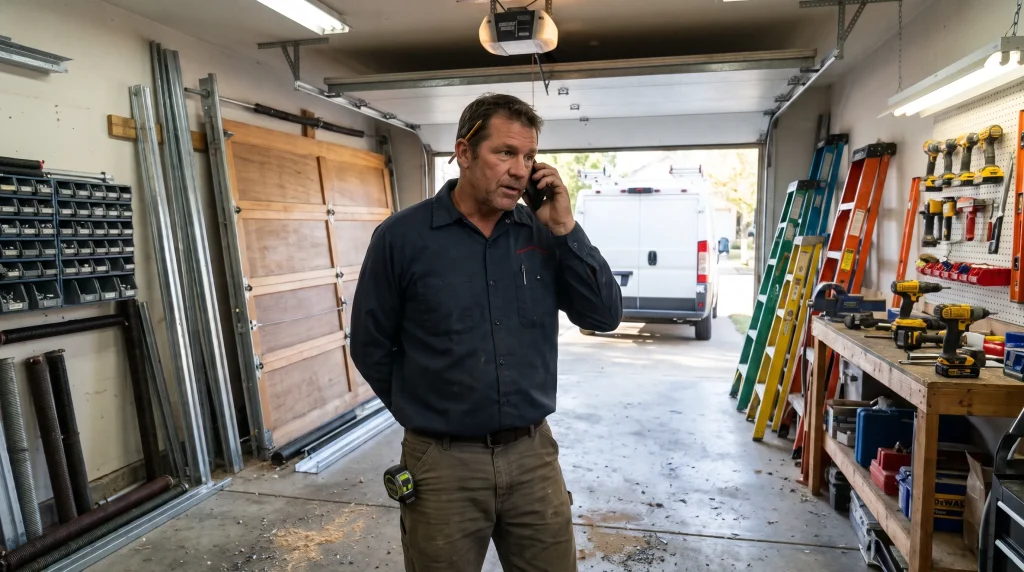
One confirmed symptom is enough reason to treat the spring as a genuine safety concern, not a minor, easily ignored inconvenience.
The right response depends on how the symptom presents itself:
- Stop using the door immediately if it makes a loud bang or suddenly drops.
- Schedule garage door repair within a few days for gradually developing symptoms.
- Avoid forcing a door that resists opening or closing normally.
- Document when the symptom first appeared for reference during service.
- Keep the area clear until a technician can safely assess the spring.
To learn what changes about daily safety once a symptom like this appears, read our guide on Is It Safe to Use a Garage Door With a Worn Spring?, which explains what a failing spring means for continued use.
A Confirmed Sign Means Replacement Is Close
Physical and audible symptoms rarely appear without reason, since a spring under declining tension almost always shows some warning before it fails completely. Acting on a confirmed sign quickly protects both the door system and anyone standing nearby when the spring eventually gives out.
Davis Overhead Doors, LLC inspects and diagnoses spring symptoms for homeowners across Cleveland, TX before recommending a repair or full replacement. Contact us or give us a call today, and let our technicians confirm what the symptom means before it leads to complete failure.