
Daily use, rust, temperature swings, and a door that has drifted out of balance all contribute to garage door spring wear over time, often working together. These factors compound the strain on the coil with every single cycle, gradually pushing the spring closer to complete failure.
Springs carry the door’s full weight under constant tension, so scheduling garage door service early often identifies a weakening spring well before it fails outright. This guide explains each cause of wear in detail, along with what typically happens once a spring is left unaddressed for too long.
Key Takeaways
- Repeated daily cycles gradually fatigue the metal coil, even under normal use.
- Rust and corrosion weaken a spring’s structural integrity well before any visible failure.
- Temperature extremes cause metal to expand and contract, accelerating wear over time.
- An out-of-balance door puts uneven strain on one spring, shortening its usable life.
- Age-related fatigue can weaken a coil even without any visible signs of damage.
Why Do Garage Door Springs Wear Out Over Time?
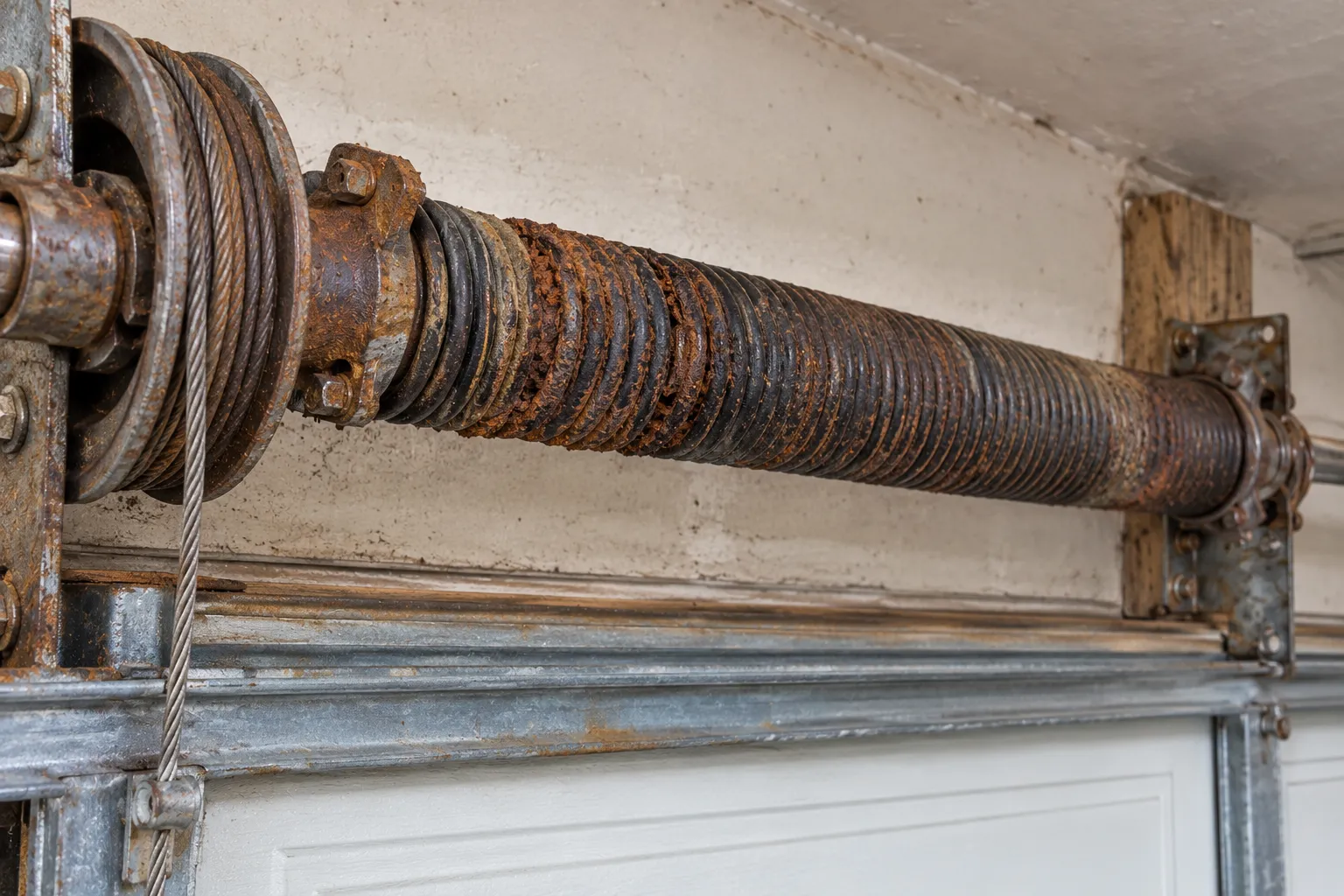
Failure points are often invisible until they happen, since internal weakening builds silently long before any visible symptom appears.
Cause | How It Weakens the Spring | What Speeds It Up |
Daily Cycles | Fatigues the metal coil with repeated tension | Heavier doors and above-average daily use |
Rust and Corrosion | Weakens structural integrity from the outside in | High humidity and coastal air exposure |
Temperature Extremes | Causes repeated expansion and contraction of the metal | Unheated garages and sudden seasonal swings |
Door Imbalance | Shifts uneven strain onto one spring | Misaligned tracks and worn rollers |
Age-Related Fatigue | Weakens the coil internally without visible signs | High cycle counts regardless of visible condition |
Combined stress from multiple directions can end a garage door spring without warning, even well before it reaches its rated cycle count.
Repeated Stress From Daily Cycles
Each open-and-close cycle puts significant tension on the coil, and that stress accumulates with every use.
Cycle-related wear tends to accelerate through the following patterns:
- Multiple daily trips that add cycles faster than the spring’s rating anticipates.
- Heavier doors that place additional strain on the coil with every cycle.
- Home offices or extra vehicles significantly increasing daily door use.
- Consistent use without any rest periods between cycles throughout the day.
- Springs approaching their rated cycle count, showing fatigue even without obvious damage.
To understand how cycle-based wear determines a realistic replacement window, read our guide on How Often Should Garage Door Springs Be Replaced?, which breaks down average lifespan by spring type and daily use.
Rust and Corrosion
Moisture exposure gradually weakens a spring’s metal coil over months or years, often long before any visible signs appear on the surface.
Corrosion damage tends to develop through the following conditions:
- Consistent high humidity that encourages rust to form on the coil surface.
- Coastal air exposure that speeds up surface corrosion considerably.
- Water exposure from an unsheltered garage entrance during rain or snow.
- Condensation buildup in an attached garage without proper ventilation.
- Corrosion concentrated near mounting brackets where moisture tends to collect.
To confirm what a rust-related symptom signals about a spring’s remaining life, read our guide on Signs a Garage Door Spring Needs Replacement, which breaks down each warning sign and what it means for continued use.
Temperature Extremes
Repeated expansion and contraction from temperature swings gradually weakens the metal, sometimes causing sudden failure without warning.
Temperature-related wear tends to show up through the following patterns:
- Extreme cold making the metal more brittle and prone to sudden failure.
- Summer heat causing the coil to expand slightly under daily tension.
- Seasonal swings between hot and cold accelerating fatigue year over year.
- Springs in unheated or uninsulated garages face sharper temperature extremes.
- Sudden snaps occurring more often during the first hard freeze of the season.
Springs already weakened by temperature extremes can fail with no warning, which is why emergency garage door repair calls often spike during sudden cold snaps.
A Door Out of Balance
Doors that have drifted out of balance force one spring to carry more than its intended share of the total weight.
Balance-related wear tends to develop through the following issues:
- Misaligned tracks placing uneven strain on one side of the door.
- Rollers that have worn unevenly, shifting weight distribution over time.
- Doors that were never properly balanced during the original installation.
- One spring stretching or weakening faster, worsening the imbalance further.
- Opener force settings compensating for the imbalance instead of correcting it.
Booking garage door track repair promptly once a door starts pulling to one side prevents the imbalance from accelerating spring wear further.
Age-Related Metal Fatigue
Coils can weaken gradually with age alone, even in a spring that shows no visible surface damage or obvious wear pattern.
Age-related fatigue tends to develop through the following factors:
- Microscopic stress fractures accumulating invisibly over years of use.
- Metal gradually losing elasticity, even without any single dramatic event.
- Springs installed years ago nearing the end of their expected lifespan regardless of appearance.
- Intact-looking springs still carrying far less usable tension than when new.
- Cycle count provides a more reliable estimate than visual condition alone.
Scheduling broken garage door spring repair at the first sign of age-related fatigue is often safer than waiting for a visible warning sign that may never come.
What Should Be Done Once a Cause Is Identified?
Identifying the specific cause of a spring’s wear lets you address the real problem instead of guessing at a fix.
The right next step depends on which cause is at play:
- Book an inspection if daily cycle count nears the spring’s rated limit.
- Schedule treatment or replacement if rust has reached the inner coil.
- Ask about higher-rated springs if seasonal swings recur.
- Correct track alignment first if imbalance is the main contributing factor.
- Treat age-related fatigue as a replacement priority regardless of condition.
To learn what continued use looks like once a spring has been compromised, read our guide on Is It Safe to Use a Garage Door With a Worn Spring?, which explains what changes in daily safety occur after a spring weakens.
Identifying the Cause Is the First Step to a Real Fix
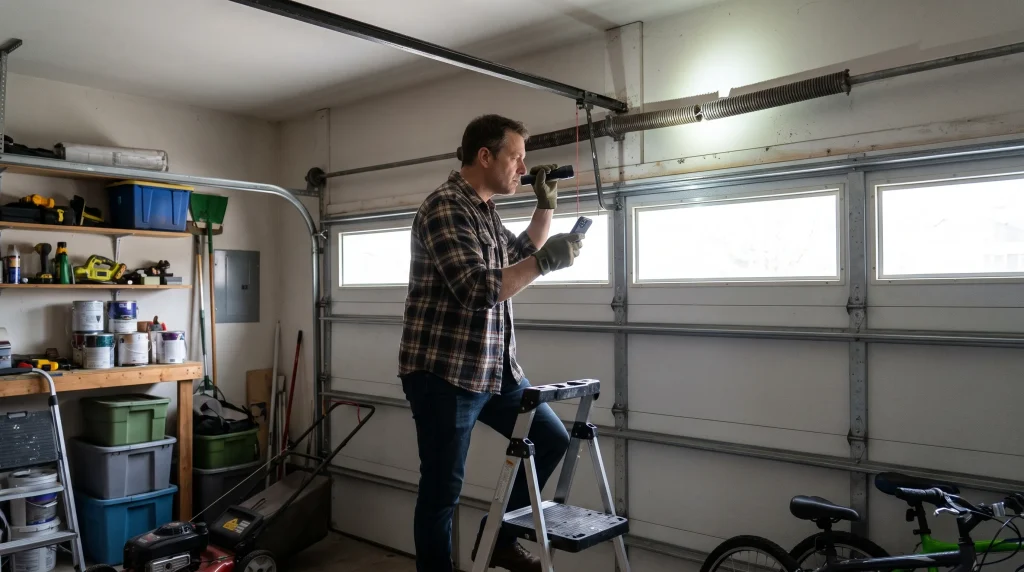
A spring’s specific cause of wear points toward a different underlying issue, from moisture and temperature to daily use and door balance, and each one calls for its own approach. Identifying that cause behind a spring’s condition allows for a targeted fix instead of a temporary patch that fails again soon after.
Davis Overhead Doors, LLC diagnoses the exact cause behind a worn spring for homeowners across Cleveland, TX, before recommending a repair or replacement. Contact us or give us a call today, and let our technicians confirm what caused the wear before it leads to complete failure.