
Garage door springs typically need replacement every seven to nine years under normal daily use, though the exact timeline depends on several factors. Usage frequency, climate conditions, and maintenance history all shape how quickly two identical doors can wear at noticeably different rates.
Daily opening and closing cycles put enormous tension on a spring every time the door moves throughout the year. This guide covers the average lifespan of a garage door spring, why wear speeds up under certain conditions, and when to schedule garage door service before a full failure occurs.
Key Takeaways
- Garage door springs typically last several years, with lifespan measured in open-and-close cycles rather than calendar time.
- Climate, spring type, and maintenance history all directly affect how long a spring performs safely.
- Visible gaps, loud noises, and a door that feels heavier than usual often signal spring failure is close.
- A worn spring left in place can snap suddenly, creating a real safety hazard for anyone nearby.
- Annual inspections and proper lubrication meaningfully extend spring life.
How Long Do Garage Door Springs Typically Last?
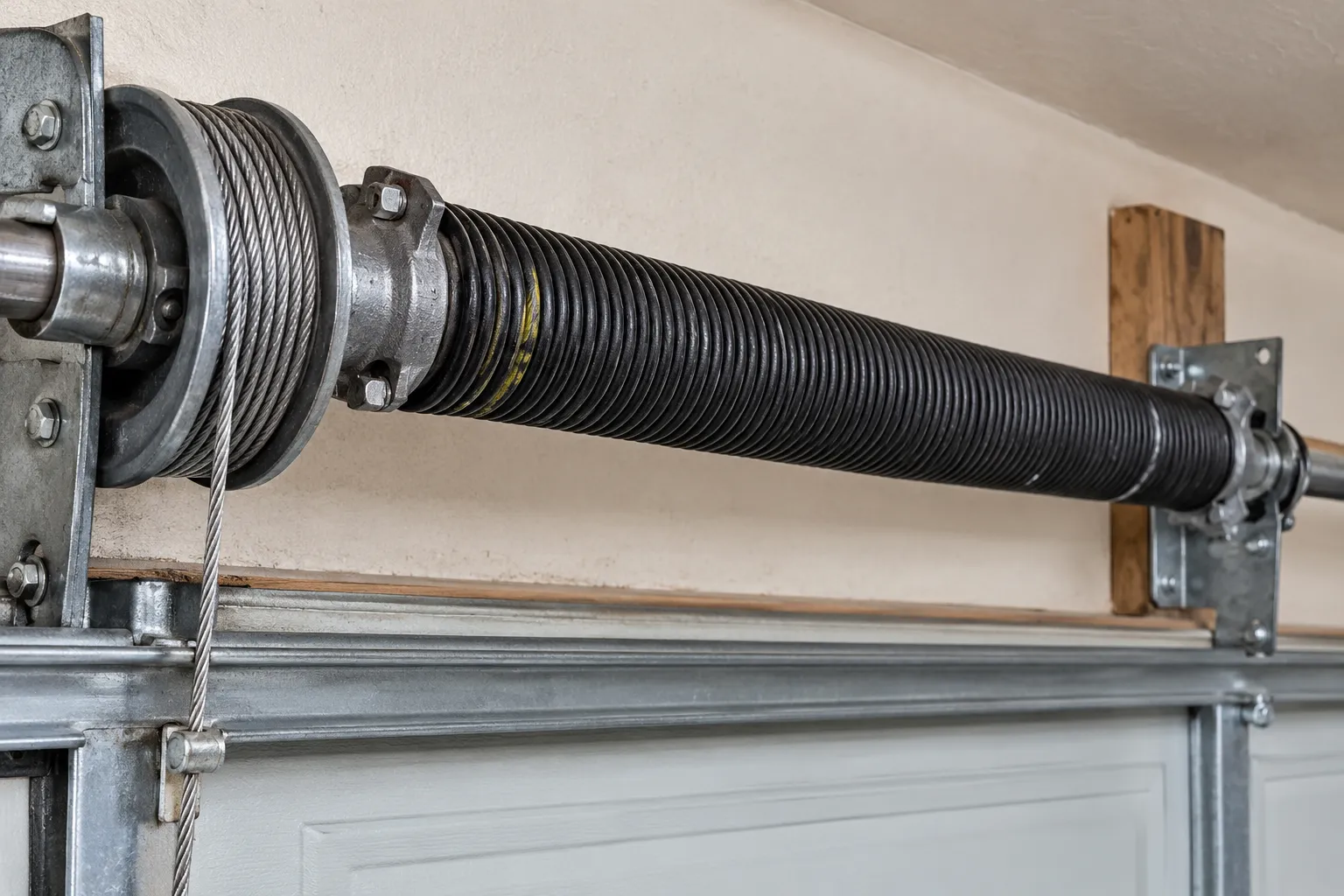
Rated cycle counts, not calendar years, determine how long a garage door spring actually performs safely under daily tension.
Spring Type | Typical Cycle Rating | Approximate Lifespan |
Standard torsion spring | Around 10,000 cycles | 7 to 9 years under average daily use |
High-cycle torsion spring | 20,000 cycles or more | 12 to 15 years under average daily use |
Standard extension spring | Around 10,000 cycles | 6 to 8 years under average daily use |
High-cycle extension spring | 15,000 to 20,000 cycles | 10 to 12 years under average daily use |
Heavy-duty commercial-grade spring | 25,000 cycles or more | 15 years or more under average daily use |
The correct spring type and cycle rating, matched to the door’s actual weight, gives a far more accurate lifespan estimate than a generic assumption.
Factors That Affect Garage Door Spring Lifespan
Daily Usage and Cycle Count
Frequency of use directly determines how quickly a spring works through its rated lifespan, regardless of the spring’s original quality.
These patterns add cycles faster than average:
- Multiple daily trips in and out of the garage during work commutes.
- A home office setup that increases door use throughout the day.
- Additional vehicles sharing the same garage and door system.
- Frequent door use for purposes beyond vehicle access.
- A door that rarely rests for more than a few hours at a time.
Tracking rough daily cycle counts gives a far more accurate lifespan estimate than relying on calendar age alone.
Climate and Environmental Exposure
Weather and location both play a measurable role in how quickly a spring’s metal coil breaks down under constant daily tension.
A spring ages faster under any of these conditions:
- Consistent high humidity that encourages rust over time.
- Extreme temperature swings that repeatedly expand and contract metal.
- Salt air exposure in coastal regions that speeds up surface corrosion.
- Direct exposure to rain or snow due to an unsheltered garage entrance.
- Lack of climate control in an attached garage during extreme seasons.
Springs exposed to harsh environmental conditions may need replacement well before they reach their rated cycle count.
Spring Type and Quality
The type, gauge, and quality of the original spring all directly affect how long it lasts under daily tension and repeated use.
Longevity often comes down to these specific choices:
- Standard-grade springs versus higher-cycle springs rated for extended use.
- The gauge and coil diameter match the door’s weight.
- Torsion springs generally outperform extension springs of similar grade.
- Manufacturer-specified parts versus generic aftermarket replacements.
- Correct spring sizing based on the door’s full weight and dimensions.
A spring rated below the door’s actual weight can shorten its usable life by several years, even with a correct installation.
Maintenance History
Missed inspections and neglected upkeep quietly shorten how long a spring performs safely under daily tension.
A lapse in care tends to show up in these ways:
- Lubrication left undone, leaving the coils and moving parts under added friction.
- Rust, fraying, or visible gaps left unaddressed for long stretches.
- Ignoring unusual noises instead of investigating them during normal operation.
- No balance testing to catch uneven weight distribution early.
- No professional inspection scheduled in a year or longer.
Springs without consistent garage door maintenance often fail well before reaching their rated cycle count, sometimes several years earlier than expected.
Common Causes of Garage Door Spring Wear
Garage door spring wear develops gradually through a handful of predictable mechanisms tied to tension, environment, and daily use.
The following causes account for most spring wear over time:
- Repeated stress cycles that gradually fatigue the metal coil over years of use.
- Rust forming on the coil surface due to consistent moisture exposure.
- Temperature extremes causing the metal to expand and contract repeatedly.
- Doors that have fallen out of balance, placing uneven strain on the spring.
- Age-related metal fatigue that weakens the coil even without visible damage.
To understand why one spring ages faster than another under seemingly similar conditions, read our guide on What Causes a Garage Door Spring to Wear Out?, which breaks down the specific mechanisms behind premature spring failure.
How to Tell a Garage Door Spring Is Failing
Physical and audible signs typically appear well before a spring fails completely, giving a homeowner a real window to act before an emergency happens.
Each sign points to a specific stage of spring failure:
- Seeing a gap in the coil means the spring has already partially failed.
- Hearing a loud bang or snap means a spring has likely broken under tension.
- Feeling extra resistance when lifting means the spring no longer offsets the door’s weight.
- Noticing uneven movement means one spring is weaker or has failed.
- A door that will not stay open means spring tension has dropped too low.
To confirm what a symptom means for continued use, read our guide on Signs a Garage Door Spring Needs Replacement, which breaks each one down in more detail and explains what it signals about remaining spring life.
What Happens If a Worn Spring Is Not Replaced in Time?
Worn springs left in service eventually fail completely, often without warning, and the timing is rarely predictable.
Delaying replacement can lead to the following outcomes:
- Sudden snaps that drop the door without warning during normal use.
- Serious injury if anyone stands near the door when a spring breaks.
- Extreme tension transferring to the remaining spring on a two-spring system.
- Additional strain placed on the opener motor as it compensates for the loss.
- Damage to tracks, rollers, or panels if the door falls unevenly.
To learn what specifically changes about daily safety once a spring has already failed, read our guide on Is It Safe to Use a Garage Door With a Worn Spring?, which explains exactly what a failing spring means for continued use.
How to Extend the Life of a Garage Door Spring
Consistent habits meaningfully extend how long a spring performs safely, even in households with heavy daily use.
Extending spring life comes down to the following practices:
- Scheduling annual professional inspections to identify early signs of wear.
- Applying lubricant to the spring coils on a consistent schedule.
- Testing door balance periodically to confirm even weight distribution.
- Avoiding manual force on a door that resists opening or closing normally.
- Booking a broken garage door spring repair promptly at the first sign of trouble.
Springs maintained this way rarely fail without warning, since visible signs typically appear well ahead of a complete break.
How Professionals Handle Garage Door Spring Replacement
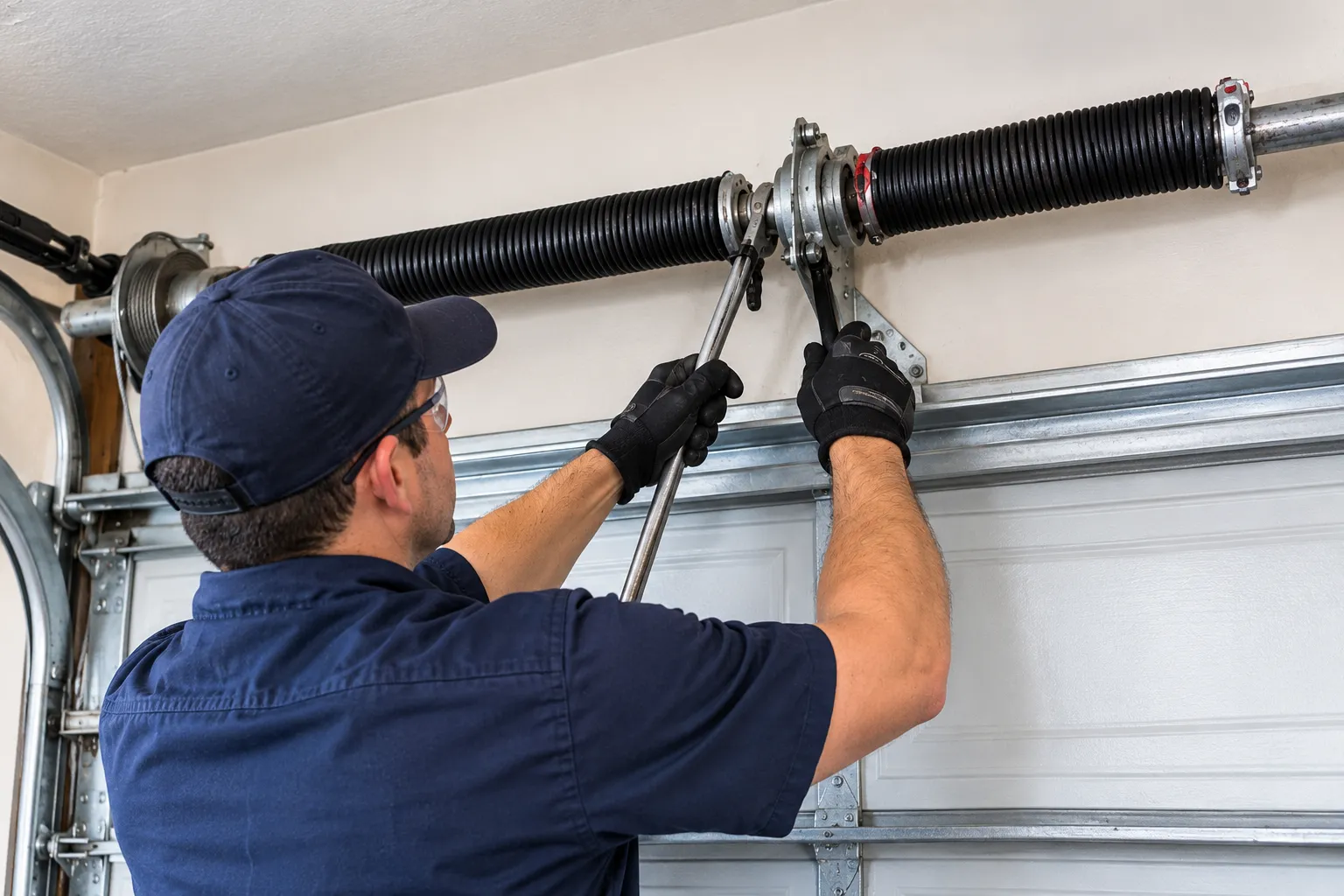
Replacing a garage door spring involves specialized tools and safety procedures that go well beyond a typical household repair.
Professional replacement generally includes the following steps:
- Safely releasing stored tension using specialized winding bars and clamps.
- Matching the new spring’s gauge and length to the door’s exact weight.
- Replacing both springs together on a two-spring system for balanced tension.
- Testing door balance and opener performance after installing the new spring.
- Providing a warranty on both the spring and the labor completed.
Trained technicians completing garage door repair work carry the tools and experience needed to handle high-tension components without unnecessary risk.
The Signs and the Cycle Count Both Decide Replacement Timing
Garage door springs rarely fail without warning, since visible gaps, loud noises, and a heavier door typically appear well before a complete break happens. Watching for these signs alongside the spring’s approximate cycle count gives a homeowner a realistic, safe replacement timeline.
Davis Overhead Doors, LLC inspects and replaces worn springs for homeowners across Cleveland, TX, before a small issue becomes a serious safety hazard for the entire household. Contact us or give us a call today, and let our technicians confirm what a spring needs before it fails completely.